
Stages of retinoblastoma
Staging describes or classifies a cancer based on how much cancer there is in the body and where it is when first diagnosed. This is often called the extent of cancer. Information from tests is used to find out the size of the tumour, which parts of the organ have cancer, whether the cancer has spread from where it first started and where the cancer has spread. Your healthcare team uses the stage to plan treatment and estimate the outcome (your prognosis).
Three staging systems are used to classify retinoblastoma:
- International Classification for Intraocular Retinoblastoma
- Reese-Ellsworth staging system
- TNM staging system
The International Classification for Intraocular Retinoblastoma is the preferred staging system in Canada. The Reese-Ellsworth and TNM staging systems may also be used. The International Classification for Intraocular Retinoblastoma and the Reese-Ellsworth staging systems are based on retinoblastoma that has not spread outside the eye (called intraocular retinoblastoma).
Talk to your child’s doctor if you have questions about staging.
When describing the stage, doctors may use the words intraocular, extraocular, regional or distant. Intraocular means that the cancer is only inside the eye and has not spread. Extraocular means that the cancer has spread outside the eye. Regional means close to or around the eye. Distant means in a part of the body farther from the eye. If retinoblastoma is found in both eyes, each eye is staged separately.
Find out more about staging cancer.
International Classification for Intraocular Retinoblastoma
The International Classification for Intraocular Retinoblastoma uses groupings to help predict the likelihood that the eye can be saved with current treatment options.
Group A
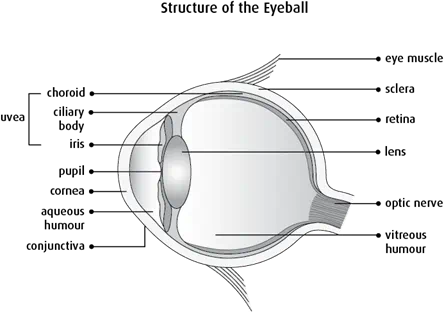
Tumours are small (3 mm or smaller) and are within the retina. The tumours are away from the fovea (a structure within the retina) and optic disc (the area where the optic nerve leaves the back of the eye).
Group B
Tumours are larger than 3 mm and in any part of the retina.
Group C
There may be some tiny areas of cancer spread within the back of the eye (called seeding), and some of the retina may be detached.
Group D
The cancer has spread throughout the back of the eye, and some or all of the retina may be detached.
Group E
There is no longer sight in the eye with cancer, or any of the following:
- the tumour is touching the lens or has grown into the front of the eye
- the tumour is causing increased pressure in the eye (called glaucoma)
- there is blood in the front of the eye or bleeding from the eye
- the eye looks infected but isn’t
Reese-Ellsworth staging system
The Reese-Ellsworth staging system was developed in the 1960s when it was more common to treat retinoblastoma with radiation therapy instead of surgery to remove the eye (enucleation). This system uses groupings to predict whether the child will be able to see after treatment.
Group 1 (very favourable)
The eye can likely be saved and the child will be able to see after treatment.
Group 2 (favourable)
The eye can probably be saved and the child may be able to see after treatment.
Group 3 (doubtful)
The eye may not be saved.
Group 4 (unfavourable)
The eye is unlikely to be saved.
Group 5 (very unfavourable)
The eye is very unlikely to be saved.
TNM
The TNM staging system is used to stage many solid tumour cancers that form lumps. For retinoblastoma, the TNM system is mainly used in countries where cases are often advanced and the cancer has spread outside the eye (extraocular retinoblastoma). In North America, retinoblastoma is usually found before it spreads outside the eye, so the TNM system isn’t used very often.
For staging retinoblastoma using the TNM system, there are 4 stages. Often the stages 1 to 4 are written as the Roman numerals I, II, III and IV. Generally, the higher the stage number, the more the cancer has spread.
Stage 1
The tumour is only in the eyeball.
Stage 2
The tumour has grown into the optic nerve or the tissues surrounding the eye within the eye socket (orbit).
Stage 3
The cancer has grown outside the eye or to nearby lymph nodes.
Stage 4
The cancer has spread to other parts of the body (called distant metastasis), such as the brain or the lungs. This is called metastatic retinoblastoma.
Recurrent retinoblastoma
Recurrent retinoblastoma means that the cancer has come back after it has been treated. If it comes back in the same place that the cancer first started, it’s called local recurrence. If it comes back in tissues or lymph nodes close to where it first started, it’s called regional recurrence. It can also recur in another part of the body. This is called distant metastasis or distant recurrence.